Calybrix: Industrial reliability intelligence

Every asset.
Nothing flying blind.

In a real gas plant we found 350 motors, and only 12 were monitored.
The other 338 weren't unimportant. Monitoring them simply wasn't economically viable.

Calybrix makes it possible to monitor the assets that industrial and power plants have always had to leave unseen and understand when something starts to go wrong.

100%
Asset coverage vs. ~3% today
<1%
Of motors monitored worldwide
15 min
Install — bolt-on, no wiring
€100
Per asset / year
The Problem

Unplanned downtime is expensive.
The problem is that most failures aren't seen coming.

Power generation plants, combined-cycle facilities in particular, run on dozens of rotating and electrical assets. A single failure can trigger a plant trip or take the unit offline, incurring significant availability penalties. As in industrial plants more broadly, an unplanned failure halts production, with costs that can reach millions of dollars per hour.

$0
A forced outage in a combined-cycle gas plant can cost more than $500,000 per hour.
One bearing failure on a 400 MW turbine led to $36.7M in lost generation.
$0
An automotive production line can lose up to $2.3M for every hour it stops.
In general manufacturing, downtime averages around $260,000 per hour.
$0
Estimated annual cost of unplanned downtime for the world's 500 largest companies.
Downtime costs are roughly 50% higher today than in 2019.
12 of 350 monitored
● Monitored   ○ Flying blind

This is what we found in a real gas plant. Out of 350 motors, only 12 were continuously monitored. The other 338 weren't unimportant monitoring them simply wasn't economically viable.

And this is not just a coverage problem. Most predictive maintenance systems learn from historical failures: they recognise what they have already seen. When a new anomaly appears, or a failure originates somewhere outside the machine itself, identifying the cause becomes much harder.

The problem isn't a lack of predictive maintenance. It's the lack of visibility across the majority of industrial assets.

The Solution

See every asset.
Understand every failure.

Calybrix combines low-cost sensing with physics-informed intelligence to monitor industrial assets that are currently left unobserved. Each Hummingbird collects mechanical, electrical and process data, then learns how that specific machine should behave.

01
Mechanical sensing
A compact sensor mounted directly on the machine captures vibration and temperature continuously, with signal processing performed at the edge. This analysis yields bearing condition, lubrication status, rotational speed and the condition of the motor windings.
02
Electrical sensing
Phase voltage meters combined with split-core current sensors capture the electrical signature of the asset without modifying the existing installation, obtaining all electrical variables of the system.
03
Process context
Existing process variables provide context around how the machine is operating, connecting mechanical and electrical behaviour to the wider process.
04
Communication system
All sensors communicate over a Zigbee mesh network that becomes more stable as the number of sensors increases, with no need for industrial Wi-Fi or any additional cabling. The network scales from fewer than ten sensors to hundreds.

From individual assets to the whole plant

Layer 01

Adaptive models

Each asset model continuously processes and separates meaningful signal from operational noise and adapts as the machine changes over time.

Layer 02

Plant-level intelligence

The system connects assets across the plant to understand dependencies and trace how a fault propagates.

Layer 03

Decision validation

Multiple models evaluate critical events before an alert becomes an operational recommendation.

The Market

We don't sell to plants.
We scale one asset at a time.

Our entry point is the industrial motor: a widely deployed asset, often critical to the process, but rarely monitored because the economics don't justify traditional systems. At €100 per asset per year, the market is measured in installed assets, not in the number of industrial sites.

TAM · €118B SAM · €20B SOM · €200M
TAM — €118B / year

We start with motors, but the same sensing architecture can extend to pumps, compressors, fans, HVAC systems and electrical assets such as transformers. That represents more than one billion electromechanical assets worldwide at our target price point.

SAM — €20B / year

Around 200 million of those assets operate in critical industries: power generation, refining, petrochemicals, critical HVAC and high-volume manufacturing. These are environments where downtime creates a direct and measurable economic loss.

SOM — €200M ARR

Our initial target is 1% of the serviceable market. We enter through gas power generation, where a typical plant contains hundreds of motors and provides a clear land-and-expand path into adjacent assets and additional sites.

A plant with 350 motors represents €35,000/year in recurring revenue. One unplanned outage can cost millions.
Why this market is opening now

Hardware costs have fallen. Low-cost MEMS sensors, wireless connectivity and edge computing now make continuous monitoring economically viable for assets that were previously too expensive to instrument.

Industrial assets are becoming more critical. New power demand, ageing infrastructure and increasingly complex industrial systems increase the cost of unexpected failure.

Why plants need it now

Downtime is getting more expensive. Plants are under increasing pressure to maximise availability while avoiding unplanned maintenance events.

Maintenance teams are getting smaller. Operators need systems that help prioritise attention and identify where problems originate not another layer of alarms.

The Competition

The problem isn't a lack of solutions.
It's that each solves only part of it.

Today's market is split between software that analyses existing data, premium monitoring systems for selected critical assets, and manual inspection. None are designed to make broad, continuous monitoring economically viable across an entire plant.

Enterprise software
IBM Maximo · Siemens Senseye
⊕ Works with existing plant data
⊕ Strong on already-instrumented assets
⊖ Cannot see assets that generate no data
⊖ Requires integration with existing infrastructure
Machine health monitoring
Augury · Tractian
⊕ Continuous monitoring of critical machines
⊕ Strong vibration-based diagnostics
⊖ Premium economics limit broad deployment
⊖ Focused primarily on rotating equipment
Broad asset intelligence
Calybrix
⊕ Designed for broad asset coverage
⊕ Mechanical, electrical and process signals
⊕ Models individual asset behaviour
⊕ Connects faults across the wider plant

Enterprise platforms analyse the data plants already collect. Machine-health specialists add monitoring where the economics justify it. The gap is everything in between: the hundreds of assets that remain unmonitored because traditional approaches do not scale economically.

Calybrix is built for that gap: broad coverage first, intelligence on top.

Why Us

Built from the machine up.
And from the failure back.

The intelligence & the hardware
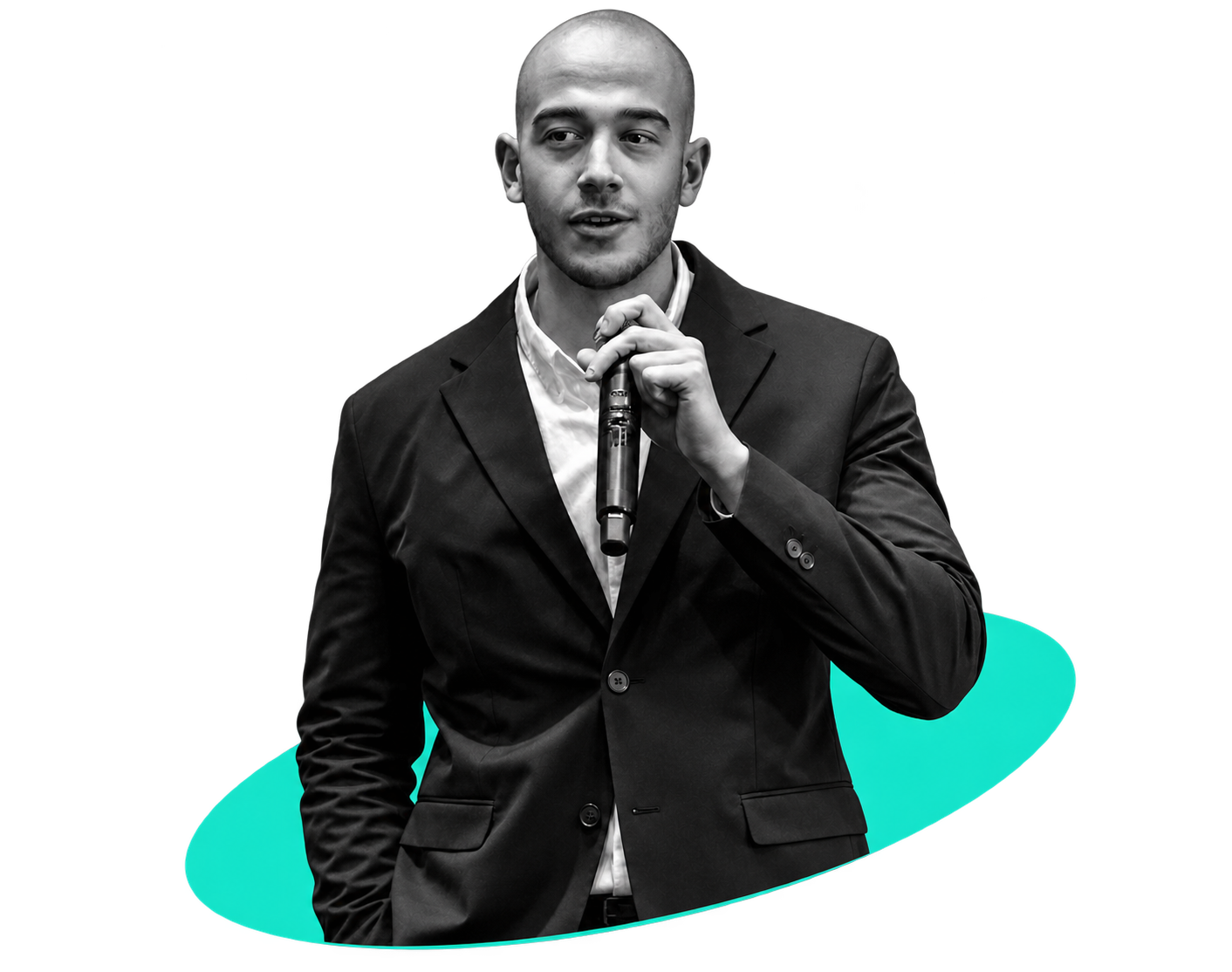
Miguel Jiménez Sarria

Energy engineer specialised in power generation and turbomachinery, currently working in the energy sector at Elecnor do Brasil. He built and operated a gas turbine prototype from a truck turbocharger, taking it beyond 80,000 rpm and generating electricity.

He designed the instrumentation around it himself integrating SCADA, PLC control and temperature, pressure and speed sensing. That experience sits directly at the intersection of Calybrix: understanding the physical asset, capturing its signals and turning them into a working monitoring system.

The business & the strategy
Alberto Gil Cordero

Engineer focused on turning complex industrial systems into actionable models. His recent work has centred on physics-informed AI, predictive maintenance and digital twins including a factory-floor prototype designed to detect equipment failures using physical models and continuous learning.

He brings the business side of Calybrix, with multiple ventures launched, partnerships built, and goals achieved, as demonstrated by international awards, multiple hackathon victories, and more than €50k in non-dilutive funding. Currently completing his MBA at Collège des Ingénieurs while working in a manufacturing company, he adds the startup, strategy, and execution expertise needed to turn the technology into a successful company.

Miguel Jiménez Sarria
Alberto Gil Cordero
Alberto Gil Cordero
Jean-Christophe Guerin
"

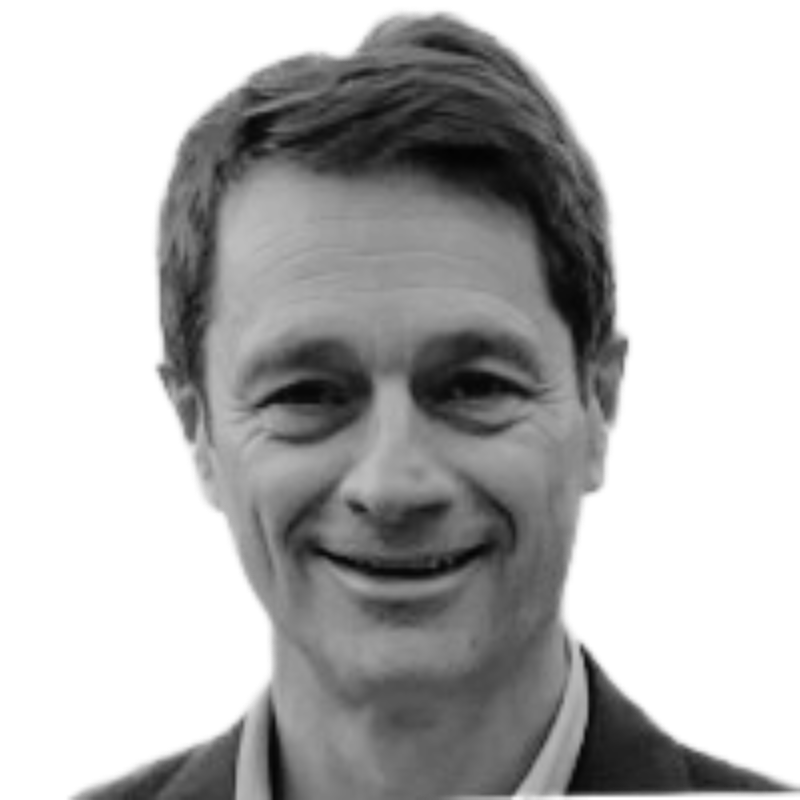
The problem is real, and this project could close the three gaps existing solutions leave open.

Jean-Christophe Guerin
Former EVP of Manufacturing · Michelin

This is not the team's first deep-tech venture. The founders have already taken complex energy and AI concepts from technical idea to prototype, EIC Pathfinder applications through partnerships with CEA, Politecnico de Milano, Universidad Politecnica de Madrid and EIT Innoenergy, and competitions and external validation including 1st prize at EIT Jumpstarter 2025 in Energy & Renewables and multiple international awards through different ventures and individual projects. More importantly, Calybrix did not start from a market report. It started from a win in one of the biggest hackatoms in Europe: RAISE Submmit Paris 2026.

The Model

Two parts: sensor and intelligence.

Flexible entry, then expansion within the same customer.

Mode A

Sensor + intelligence

For customers with no instrumentation. We deploy the sensor and our AI together — our main entry point today.

€100/asset/yr + low one-off hardware
Mode B

AI layer only

For customers with existing sensors and data. We connect to their SCADA/PLC and use the signals they already have.

Software subscription · highest margin
Mode C

Low-cost hardware

We can price the hardware aggressively to maximize coverage, while monetizing the intelligence layer.

Low-cost entry · monetize intelligence

Land-and-expand: why ARR per account grows on its own

From one motor to an industry

1
Phase 1 · Energy
Power plants and data centers
Our beachhead. High cost of failure, clear use case, known physics.
2
Phase 2 · Process
Manufacturing & petrochem
Same hardware, more assets per plant.
3
Phase 3 · Data
Critical components
Real failure data at scale. Predict and certify component life.
4
Phase 4 · Reliability
Aviation · defense · nuclear
High-reliability industries where failure is catastrophic.
The Unknowns

The highest-impact, lowest-certainty assumptions ordered by risk.

We know exactly what we're betting on, and how we de-risk each one.

Impact →
Certainty →
Focus now
Monitor
Watch
Low priority
Select a risk
Six assumptions, mapped
Every dot is an assumption placed by impact (vertical) and certainty (horizontal). Top-left = highest impact, lowest certainty — what we de-risk first. Tap a number to see the bet and how we retire it.
The assumption we bet the most on: that the client pays €100 to see an asset they ignore today, and that our prediction of the never-seen is reliable in the field. If those two are true, the rest is execution.
Your Plan

The first 90 days: prove it in the field.

Two things matter most: will customers pay, and can we predict real failures? We answer both by getting into plants and collecting real data.

Phase 01 Days 1–30
Talk to customers & sign LOIs
Status: Customer discovery
  • 15–20 conversations with reliability & O&M teams
  • Turn Guerin's validation into operator meetings
  • Offer pilots at marginal cost in exchange for data access
  • Define the conversion to €100/asset/year
✕ No final product yet
Phase 02 Days 31–60
Build the sensors & enter the plant
Status: Hardware live
  • Build the vibration puck + current CTs
  • Pre-validate the model on public datasets
  • Connect hardware, real signals and the model
  • Install on the first 10–20 assets
✕ No full-scale deployment yet
Phase 03 Days 61–90
Train on real data & prove prediction
Status: Decisive experiment
  • Run the model on live plant data
  • Measure installation, network performance and accuracy
  • Test whether the LOI converts into a paying customer
  • Focus on a few assets across several plants
✕ No full-plant rollout yet
What we need to prove in 90 days
Demand
Several LOIs signed, with at least one converting to a paying customer.
Real data
Sensors installed and collecting data across several plants.
Precision
At least one real failure predicted weeks in advance using plant data.
Cost / deploy
Measure installation time, cost per asset and network stability.
Let's talk

Cheap eyes on 100% of the plant.
Let's put them there.

If you let us join the flying wheel program, we will reshape together the manufacturing industry.

Calybrix·RAISE Summit 2026 Winner·The future of predictive maintenance